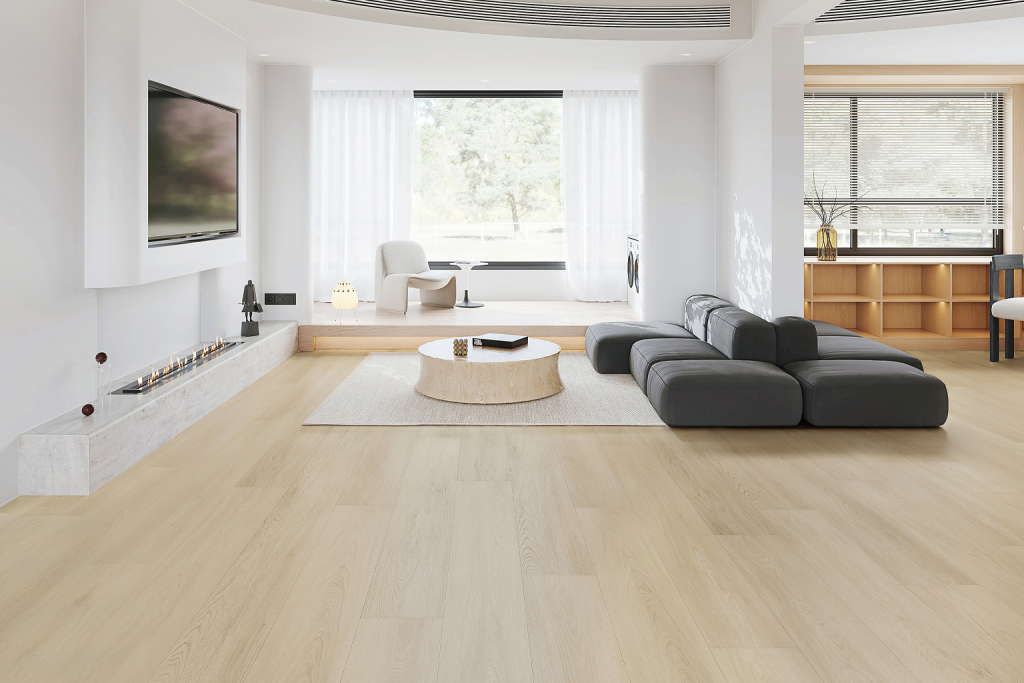
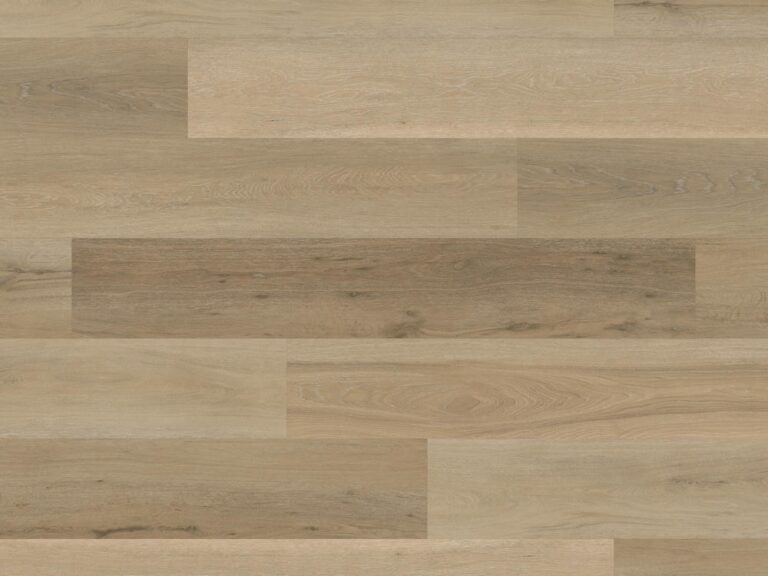
Vinyl and hybrid are two of the most popular floors in Australian homes. Both are timber-look, practical and easy to clean, and both are often called vinyl in the shop. So what is the real difference? This guide to vinyl vs hybrid flooring compares how they are made, how they are installed, how they handle water and noise, and which rooms suit each, with the ranges we stock.
Vinyl vs hybrid flooring at a glance
Vinyl plank
Hybrid
Construction
Flexible vinyl layers, 3 to 5mm thick on our ranges
Rigid core (SPC on our Royal ranges) with a wear layer, usually with attached underlay
Installation
Glue-down or loose lay
Click-lock floating floor
Water
Waterproof surface
Waterproof core on our Royal ranges
Feel
Softer, warmer and quieter underfoot
Firmer, more like timber
Subfloor
Needs a very smooth, flat subfloor
More forgiving of minor imperfections, but still needs to be flat
Repairs
Glue-down: a plank can be cut out; loose lay: lift and replace
Boards can be replaced, often by unclicking from the nearest wall
How vinyl plank is made and installed
Vinyl plank is a flexible floor built from layers of vinyl with a printed design and a clear wear layer. Our Royal vinyl planks are glued to the subfloor with a full trowel of adhesive, so they do not move, sound solid and can run under kickboards without gaps. Karndean’s LooseLay planks have a heavy backing that holds them in place without adhesive, and they can be lifted and replaced. Because vinyl is thin and flexible, it follows the subfloor exactly, so the slab must be smooth and flat first. We check this at the measure and include any levelling in the quote.
How hybrid is made and installed
Hybrid flooring has a rigid core, often a stone-plastic composite, with a vinyl-based printed layer and wear layer on top and, on most ranges, an acoustic underlay attached underneath. The boards click together as a floating floor, so they go down quickly and are not fixed to the subfloor. Floating floors need expansion gaps at the walls and around fixed items like kitchen islands. Our expansion gaps guide explains why that matters.
Water and wet areas
Both have a waterproof surface, which makes them great for kitchens and family living areas. Wet areas are different. The installation guides for our Royal 3mm and 5mm Vinyl Plank say vinyl planks in bathrooms and laundries do not meet the National Construction Code and AS 3740. Some hybrids, such as our Royal hybrid ranges, can go in laundries when the edges are sealed with silicone, while others, such as Karndean Korlok, are not for wet areas at all. No floating floor goes inside a shower. See our wet areas guide before planning a laundry.
Noise and comfort
Glue-down vinyl is quiet because it is fixed down: no hollow sound underfoot. On concrete, Royal 5mm Vinyl Plank has an indicative AAAC 4 star rating direct on the slab, rising to 6 star over a 3mm or 5mm rubber underlay. Hybrids with attached underlay, such as Royal 6.5mm Premium and Royal Hybrid Pro 9mm, have an indicative 6 star rating on their own. Acoustic results are site specific, so check your strata by-laws; our apartment flooring guide explains what to ask for.
Why choose vinyl?
Quiet and comfortable, with no hollow sound, great for apartments and bedrooms.
Low profile. At 3 to 5mm, it suits renovations where door heights and transitions are tight.
Fixed in place. Glue-down vinyl suits busy spaces and runs neatly under kickboards.
Why choose hybrid?
A solid feel that is closest to real timber.
Quick click-lock installation over most flat subfloors, with underlay already attached.
One floor throughout, from living areas into the kitchen, and into laundries where the range allows.
Our vinyl ranges
Royal 3mm Vinyl Plank – a 3mm glue-down plank with a 0.55mm wear layer and anti-stain UV lacquer, in 1220 x 180mm boards. Twelve colours, 20 year residential warranty.
Royal 5mm Vinyl Plank – a 5mm glue-down plank with a 0.7mm wear layer, anti-stain coat and matte finish. Ten colours, 25 year residential warranty.
Karndean LooseLay Longboard – extra-long, wide loose lay planks, 4.5mm thick with a 0.55mm wear layer, that stay in place without adhesive. Eleven colours, Karndean lifetime residential warranty. See also LooseLay Originals.
Our hybrid ranges
Royal 6.5mm Premium – a waterproof SPC core with a 0.5mm wear layer and 1.5mm attached underlay. Twelve colours, 25 year residential warranty.
Karndean Korlok – rigid-core planks with a 0.55mm wear layer, pre-attached acoustic foam and 5G click locking. Eighteen timber looks; not for wet areas.
Royal Hybrid Pro 9mm – a 9mm board with a 0.7mm wear layer and 2mm attached acoustic underlay. Thirteen colours, 25 year residential warranty.
Choose vinyl flooring for quiet comfort, low floor heights and a fixed-down finish in apartments, bedrooms and busy living areas. Choose hybrid flooring for a solid timber feel, fast installation and one floor through the whole home. Also weighing up laminate? Read hybrid vs laminate flooring.
Neither is better for everyone. Vinyl is softer, quieter and lower profile, while hybrid has a rigid core that feels more like timber and installs quickly as a floating floor.
Is hybrid flooring a type of vinyl?
Many hybrids use a vinyl-based wear layer over a rigid core, but the rigid core makes them feel and install differently from flexible vinyl.
Can vinyl or hybrid go in a bathroom?
The guides for our Royal vinyl planks say they are not for bathrooms or laundries. Some hybrids can go in laundries with sealed edges, but no floating floor goes inside a shower. Check each range’s guide.
Which is better for apartments?
Both can work well. Glue-down vinyl over a rubber underlay and hybrids with attached underlay can both reach strong acoustic ratings. Check your strata by-laws first.
Which needs more subfloor preparation?
Vinyl, because it is thin and flexible and shows any bumps. Hybrid is more forgiving, but it still needs a flat, sound subfloor.