Hybrid vs Engineered Timber Flooring: Which Is Right for Your Home?
August 12, 2026
In the hybrid vs engineered timber flooring choice, hybrid is the easy-care option, and several of our hybrid ranges have a waterproof core. Engineered timber gives you a real wood surface that can often be sanded or recoated later, depending on its top layer.
Hybrid vs engineered timber flooring at a glance
Hybrid flooring
Engineered timber
Made of
Rigid core, printed design, clear wear layer
Real hardwood top layer on a plywood or engineered core
Look and feel
Realistic timber looks; firm underfoot
Real wood grain; every board differs
Water
Waterproof core in several ranges
AquaCore: water-resistant core; standard boards: keep dry
Scratches
Wear layer handles everyday scuffs
Marks show sooner but blend into the grain
Acoustic
Royal 6.5mm Premium is rated 6 star acoustic; results also depend on the building
Depends on underlay, installation and the building
Refinishing
Cannot be sanded
Can often be sanded or recoated, depending on the top layer
Installation
Click-lock floating
Floating or glued, by range
What is hybrid flooring made of?
Hybrid flooring is a rigid-core plank. A stable core sits under a printed design layer and a clear wear layer that takes the daily traffic. The boards click together and float over the subfloor. Our hybrid ranges:
Royal 6.5mm Premium: a 0.5mm wear layer on a waterproof core, rated 6 star acoustic. Twelve colours, 25 year limited residential warranty.
Royal 8.5mm Hybrid: a rigid, waterproof core with an embossed timber-grain surface, in twelve colours.
Royal Hybrid Pro 9mm: a 0.7mm wear layer and low-sheen 3D surface on a waterproof core. Thirteen colours, 25 year warranty.
Royal 10MM Extreme: our thickest hybrid, AC5 rated. Nine colours, 25 year limited residential warranty.
Karndean Korlok: 6.5mm rigid-core planks with a 0.55mm wear layer, in eighteen timber looks.
Engineered timber has a real hardwood top layer bonded to a stable core, usually cross-laminated plywood. The layered core helps boards move less with humidity than solid timber, and you still walk on real wood. Comparing it with solid boards too? Read our engineered vs solid timber guide. Our engineered ranges:
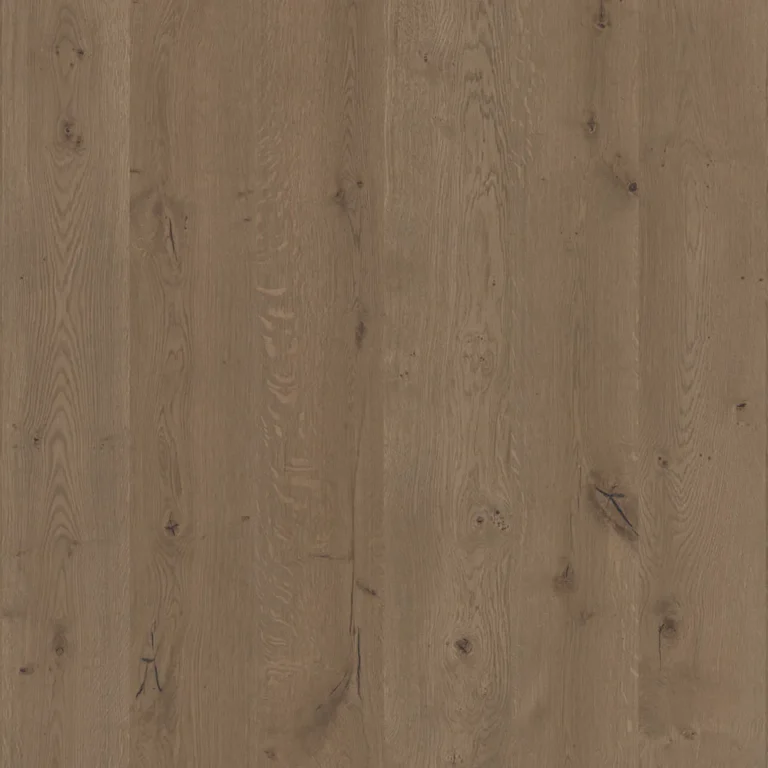
Royal 14/2mm Oak: a 2mm European Oak top layer on cross-laminated plywood. Eight colours, 20 year residential wear warranty.
Royal 15/4MM Oak: a 4mm French Oak top layer on 7 layers of eucalyptus plywood. Eight colours, 25 year limited residential warranty.
Royal AquaCore Oak: a genuine 3mm Oak surface on a water-resistant core. Ten colours, 30 year structural warranty.
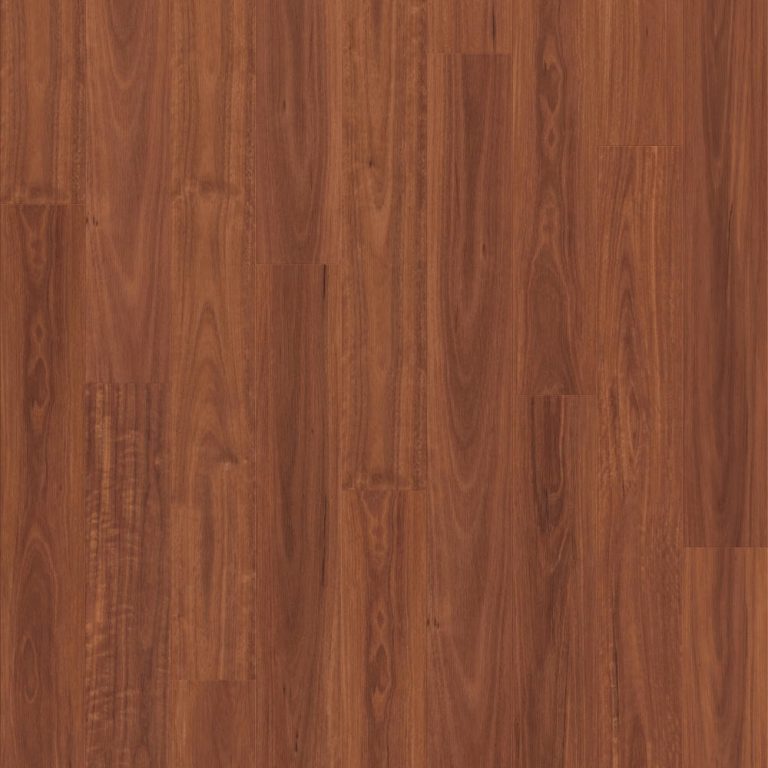
Royal AquaCore Aussie Species: a real 2mm Spotted Gum, Blackbutt, Jarrah or Sydney Blue Gum surface on a water-resistant core. Six colours, 30 year structural warranty.
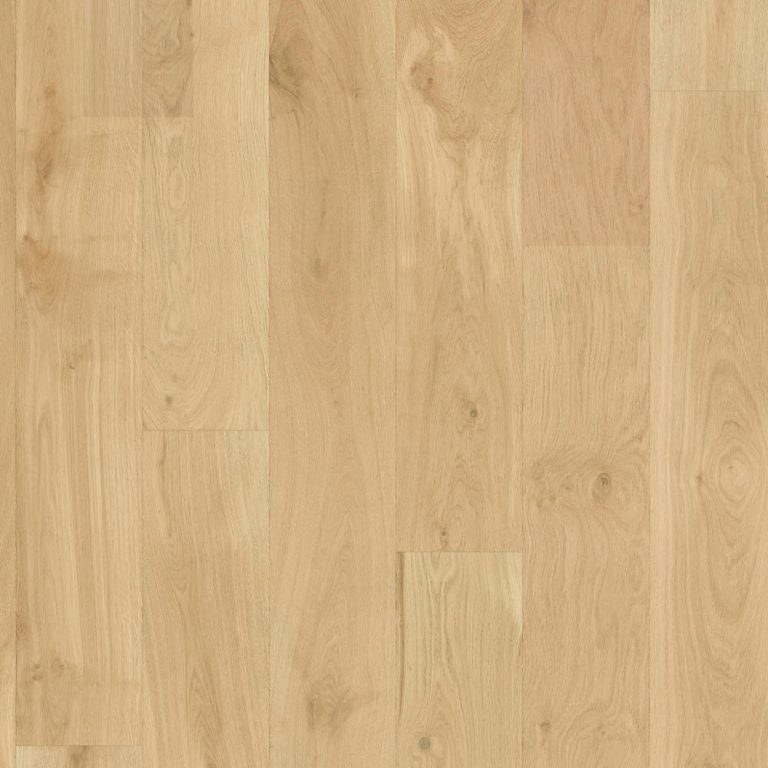
European Oak Plank: 39 colours across Natural, Prime and Select grades, in 14mm, 15mm and 20mm formats.
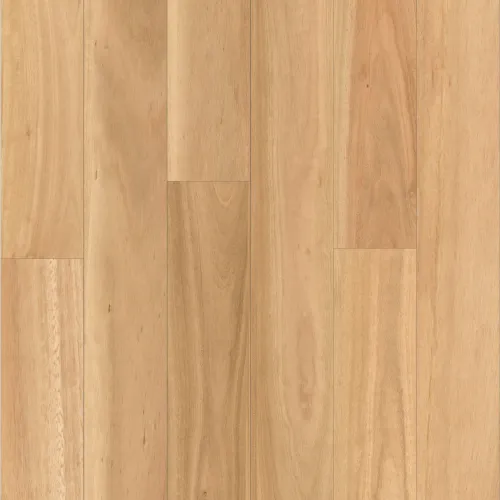
Royal Aus Timber 14/3mm: a 3mm Spotted Gum or Blackbutt top layer, in planks or herringbone blocks. 25 year limited residential warranty.
Hybrid uses a printed timber image. Textured surfaces, like the embossed grain on Royal 8.5mm Hybrid, make it more convincing.
Engineered timber is real wood, so every board has its own grain and colour variation. If genuine timber is the whole point, choose engineered.
Which handles water better?
Hybrid with a waterproof core. Royal 6.5mm Premium, Royal 8.5mm Hybrid and Royal Hybrid Pro 9mm have a waterproof core, so they suit kitchens and laundries. Still wipe up standing water so it cannot reach the edges and subfloor.
AquaCore engineered timber. Royal AquaCore Oak and AquaCore Aussie Species have a real timber surface on a water-resistant core. AquaCore Oak is suited to open-plan living, kitchens and dining areas.
Standard engineered timber. Standing water and wet mopping can damage it, so wipe up spills promptly, and choose AquaCore Oak or hybrid where spills are frequent.
A hybrid wear layer is made to take foot traffic, chair legs and pet claws, and a thicker wear layer gives more protection.
Real timber shows scratches and dents sooner, especially from grit and big dogs. The marks tend to blend into the grain, and on thicker top layers deeper wear can often be sanded out.
Which is quieter for apartments?
Many strata buildings set a minimum acoustic rating for hard floors. Royal 6.5mm Premium is rated 6 star acoustic, so it suits apartments. The result in your building also depends on the slab and ceiling, and some strata schemes ask for a test report, so check your by-laws and bring them to us. With engineered timber, the result also depends on the underlay and installation.
Can you sand and refinish them?
Engineered timber can often be sanded or recoated, depending on the top layer. How often also depends on how deep the wear is: a 4mm layer like Royal 15/4MM Oak gives more room than a 2mm layer. Our floor sanding and polishing team can advise.
Hybrid cannot be sanded. A badly damaged board is replaced, so keep a few spares after installation.
How is each one installed?
Hybrid clicks together as a floating floor over a clean, flat subfloor, so high spots and dips need levelling first.
Engineered timber is floating or glued, by range. Royal AquaCore Oak uses a click-lock system, and Royal 15/4MM Oak is tongue and groove for floating or trowel-glued installation. Timber needs time to acclimatise, and slabs should be checked for moisture.
Should I get engineered timber or hybrid flooring?
Choose hybrid for
Kitchens, laundries and entries, in a waterproof core range
Busy family areas, kids and pets
Apartments, with Royal 6.5mm Premium
Choose engineered timber for
Living, dining and bedrooms where you want real wood
Open-plan kitchens with Royal AquaCore Oak
The option to sand and refinish later
Still deciding? With over 20 years of experience, our team can show you both side by side. Visit a showroom, or book a free measure and quote and we can talk you through samples for your rooms.
Neither suits every home. Hybrid is easier care, and several of our hybrid ranges have a waterproof core. Engineered timber is real wood and can often be sanded or recoated, depending on the top layer.
Is engineered timber waterproof?
No. Standard engineered timber should be kept away from standing water. Our Royal AquaCore Oak and Royal AquaCore Aussie Species ranges have a water-resistant core, but spills should still be wiped up promptly.
Can hybrid flooring be sanded?
No. Hybrid has a printed design under a clear wear layer, so it cannot be sanded. A damaged board can be replaced, so keep a few spares after installation.
Which is better for apartments?
Check your strata by-laws first. Royal 6.5mm Premium hybrid is rated 6 star acoustic, so it suits apartments. Ask your strata whether they need a test report. With engineered timber, the result depends on the underlay and installation.