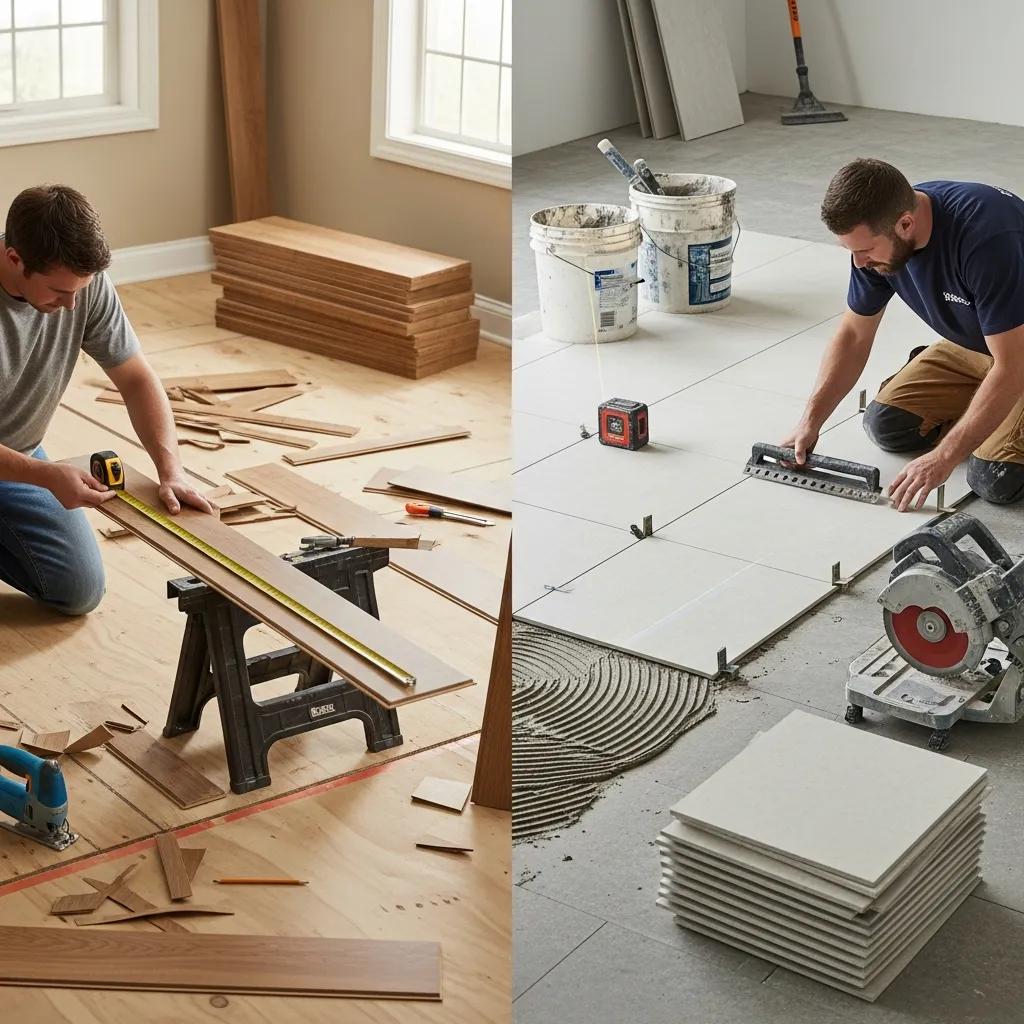
DIY Flooring vs Professional Installation: Which Is Right for You?
June 4, 2026
DIY flooring vs professional installation comes down to three things: the type of floor, the condition of your subfloor and how confident you are with tools. Click-lock hybrid and laminate floors can suit a capable DIYer. Glue-down vinyl, solid timber, carpet, stairs and floor sanding are usually best left to professionals.
DIY or professional? A quick guide by floor type
Floor type
DIY or professional?
Why
Click-lock hybrid
Suits a capable DIYer
Boards click together and float over the subfloor
Laminate
Suits a capable DIYer
A floating floor over underlay, with expansion gaps at the edges
Click-lock engineered timber
Experienced DIYers only
A real timber surface is less forgiving of mistakes
Glue-down vinyl
Professional
Needs adhesive and a very smooth subfloor
Solid timber
Professional
Fixed to the subfloor, then sanded and finished on site
Carpet
Professional
Needs stretching onto gripper strips and careful seams
Stairs (any floor)
Professional
Every tread is cut and fitted one at a time
Sanding and polishing
Professional
Heavy sanders can gouge boards in untrained hands
Which floors suit DIY installation?
Click-lock floors are the easiest to lay yourself. The boards join edge to edge and the whole floor floats over an underlay or attached backing, so there is no glue and no nailing.
Hybrid flooring.Korlok by Karndean uses 5G click locking on 6.5mm rigid-core planks, and Royal 8.5mm Hybrid has a rigid, waterproof core with click-lock floating installation. Browse more on our hybrid flooring page.
Laminate flooring. Laminate is also a floating floor. Royal Laminate 8mm comes in 1215 x 196mm boards with an AC4 surface. Check the installation guide for the range before you buy. See every range on our laminate flooring page.
Engineered timber.Royal AquaCore Oak has a genuine 3mm oak surface and a click-lock system. It suits a DIYer who has laid a floating floor before. See our timber flooring range.
Glue-down planks such as Royal 3mm Vinyl Plank are thin, so every bump in the subfloor can show through. The subfloor must be smoothed, the adhesive spread correctly and the planks laid before it sets. Explore our vinyl flooring ranges.
Solid timber
Our Traditional Solid Flooring is supplied raw for sanding and finishing on site. That means fixing boards to the subfloor, then sanding and coating them, which takes trade tools and experience.
Carpet
Carpet is laid over underlay and stretched onto gripper strips so it sits tight and flat. Seams are placed to suit the room and the light. Without a power stretcher and practice, carpet can ripple and seams can open. Our carpet installation and repair team handles this, including re-stretching. Browse our carpet ranges.
Stairs
Stairs need each tread and riser measured, cut and fitted on its own, with nosings that are secure underfoot. It is slow, precise work and safety matters.
Sanding and polishing
Drum sanders are heavy and can gouge a floor in seconds, and the finish coats need even application. Our floor sanding and polishing service takes care of it.
Tools and skills you need for DIY flooring
Tape measure, pencil and square for measuring and marking
A fine-tooth saw or drop saw for cross cuts, and a jigsaw for notches around pipes and door frames
Spacers to hold the expansion gap at the walls
A tapping block and pull bar, where the manufacturer allows them
A long straight edge to check the subfloor is flat
A multi-tool or undercut saw to trim door architraves
Safety glasses, ear protection, a dust mask and knee pads
The skills matter as much as the tools. You will need to plan the layout so the last row is not a thin sliver, stagger the joints, cut accurately and read the installation guide from start to finish before you begin.
Subfloor preparation: where DIY jobs go wrong
Most floor problems start underneath. Before laying anything, check the subfloor is:
Flat. Run a straight edge across the floor. High spots may need grinding and dips may need levelling compound.
Dry. Concrete slabs can hold moisture, which can damage some floors. Check the moisture limits in your installation guide.
Sound. Secure loose or squeaky timber boards.
Clean. Remove old carpet, underlay, gripper strips, staples and glue.
If your home was built or renovated before 1990, old vinyl, lino, tiles or their adhesive may contain asbestos. Do not sand, scrape or lift them until they have been tested.
If you find a problem you are not sure how to fix, stop and get advice. Book a free measure and quote and we can check your subfloor and quote for professional installation, so you can compare it with doing it yourself.
How DIY installation affects your warranty
Product warranties come from the manufacturer, and they can depend on correct installation. Each range has its own installation guidelines covering acclimatisation, subfloor flatness and moisture, underlay and expansion gaps. Follow them closely and keep your receipts and the guide. Some manufacturers require professional installation for the product warranty to apply, so check before you start.
When our installation team lays your floor, Royal Floors also gives a 2 year installation warranty. You can read how product and installation warranties work on our warranty page.
Benefits of hiring a professional versus DIY
Time. The job is done while you get on with your week.
The right tools. No need to buy or hire saws, levellers or stretchers.
Problems found early. Subfloor issues are picked up before the floor goes down.
Clean finishes. Doorways, trims and stairs are fitted neatly.
Doing it yourself? Our DIY flooring range covers click-lock hybrid, laminate and engineered timber flooring. Our team can give you expert advice, installation guides and product recommendations. Prefer to hand it over? We offer professional installation, and every job starts with a free measure and quote. With over 20 years of experience, we can help you decide which way to go.
Frequently asked questions
Can I install hybrid flooring myself?
Yes, if you are handy and patient. Click-lock hybrid floors such as Korlok float over the subfloor without glue. Follow the manufacturer’s installation guide closely, especially for subfloor flatness and expansion gaps.
Which floors should not be a DIY job?
Glue-down vinyl, solid timber, carpet, stairs and floor sanding are best left to professionals. They need specialist tools, adhesives or stretching, and mistakes are hard to undo.
Does DIY installation affect the flooring warranty?
It can. Product warranties come from the manufacturer and can depend on correct installation, so read the installation guide for your range before you start and follow it step by step.
What are the benefits of hiring a professional instead of DIY?
A professional brings the right tools and experience, spots subfloor problems early, handles tricky finishes such as stairs and doorways, and can often repair a damaged floor instead of replacing it. Royal Floors installations also come with a 2 year installation warranty.
Can Royal Floors help with a DIY flooring project?
Yes. Our DIY flooring range covers click-lock hybrid, laminate and engineered timber flooring, and our team can give you expert advice, installation guides and product recommendations.